Tuesday, December 10, 2024

Google unveils Willow quantum computing chip


The following text was generated by perplexity.ai in response to this question:


Why is Google's quantum chip a big deal?


[Caution: the following text has not been fact checked.]

Google's recent announcement of its quantum computing chip, Willow, marks a significant advancement in the field of quantum technology. Here are the key reasons why this development is considered a big deal:

Breakthrough in Computational Power

  • Unprecedented Speed: Willow can solve complex computational problems in under five minutes, a task that would take today's most advanced supercomputers approximately 10 septillion years to complete. This time frame far exceeds the age of the universe, highlighting the chip's extraordinary capabilities
    1
    2
    4
    .
  • Error Correction Milestone: Willow employs a novel approach to quantum error correction, allowing it to scale up the number of qubits (105 qubits in total) while significantly reducing errors. This breakthrough addresses a longstanding challenge in quantum computing, where increasing qubit numbers typically leads to higher error rates. Google claims that errors decrease exponentially as more qubits are added, a concept that has been sought after for nearly three decades
    1
    3
    4
    .

Implications for Quantum Computing

  • Path to Large-Scale Quantum Computers: The advancements made with Willow suggest a promising trajectory toward developing larger and more efficient quantum systems capable of tackling complex scientific and societal challenges. As Hartmut Neven from Google Quantum AI noted, "The more qubits we use in Willow, the more we reduce errors"—indicating a potential for scaling quantum computers effectively
    1
    3
    .
  • Potential Applications: Although practical applications remain limited at this stage, the expectation is that quantum computing will eventually enable breakthroughs in various fields such as healthcare, finance, and energy management by processing vast amounts of data simultaneously
    4
    5
    .

Challenges Ahead

Despite the excitement surrounding Willow, experts caution that practical applications are still elusive. Critics emphasize that while Google's claims are impressive, they rely on benchmarks that do not necessarily translate into real-world usefulness. For instance, achieving meaningful computations may require millions of qubits, far exceeding Willow's current capacity
4
5
.
 Additionally, the technology relies on superconducting qubits that necessitate extreme cooling conditions, posing further challenges for scalability
4
.
In summary, Google's Willow chip represents a significant leap forward in quantum computing capabilities, particularly in error correction and computational speed. While it sets a new benchmark for what is possible with quantum technology, the journey toward practical and widespread applications continues to face substantial hurdles.

Saturday, August 24, 2024

In the beginning...


First edition - 1963


Part 1 -  Artificial Intelligence


Section 1 - Can a Machine Think? by A.M.Turing


The 1995 edition:


Currently available from MIT and Amazon


Computers and Thought showcases the work of the scientists who not only defined the field of Artificial Intelligence, but who are responsible for having developed it into what it is today. Originally published in 1963, this collection includes twenty classic papers by such pioneers as A. M. Turing and Marvin Minsky who were behind the pivotal advances in artificially simulating human thought processes with computers. Among the now hard-to-find articles are reports of computer programs that play chess and checkers, prove theorems in logic and geometry, solve problems in calculus, balance assembly lines, recognize visual temporal patterns, and communicate in natural language. The reports of simulation of cognitive processes include computer models of human behavior in logic problems, deciding on common stock portfolios, and carrying out social interaction. Models of verbal learning behavior, predictive behavior in two-choice experiments, and concept formation are also included.

Articles by : Paul Armer. Carol Chomsky. Geoffrey P. E. Clarkson. Edward A. Feigenbaum. Julian Feldman. H. Gelernter. Bert F. Green, Jr. John T. Gullahorn. Jeanne E. Gullahorn. J. R. Hansen. Carl I. Hovland. Earl B. Hunt. Kenneth Laughery. Robert K. Lindsay. D. W. Loveland. Marvin Minsky. Ulric Neisser. Allen Newell. A. L. Samuel. Oliver G. Selfridge. J. C. Shaw. Herbert A. Simon. James R. Slagle. Fred M. Tonge. A. M. Turing. Leonard Uhr. Charles Vossler. Alice K. Wolf.


Sunday, August 11, 2024

Google's Gemini 1.5 Pro API for AI enabled apps

 Google's Gemini 1.5 Pro API for AI enabled apps


On 14th May 2024 at the annual Google I/O Developers Conference, the focus was entirely on AI. Google introduced the Gemini 1.5 Pro API, now available to Google developers globally.  Since then, I've been studying how to use the Gemini API by developing an app called Garden, which allows you to ask any question of a selected image of a plant. In order to create apps with the Gemini API, you need to use the latest feature drop version of Android Studio: Koala. 


More details of what's new in Android Studio (as of May 2024) here: https://youtu.be/2wOfYgIMf-A


AD 11/8/2024


Sunday, April 14, 2024

The Amphibians app - an Android app written in Kotlin using Jetpack Compose

The Amphibians app:

https://developer.android.com/codelabs/basic-android-kotlin-compose-practice-amphibians-app


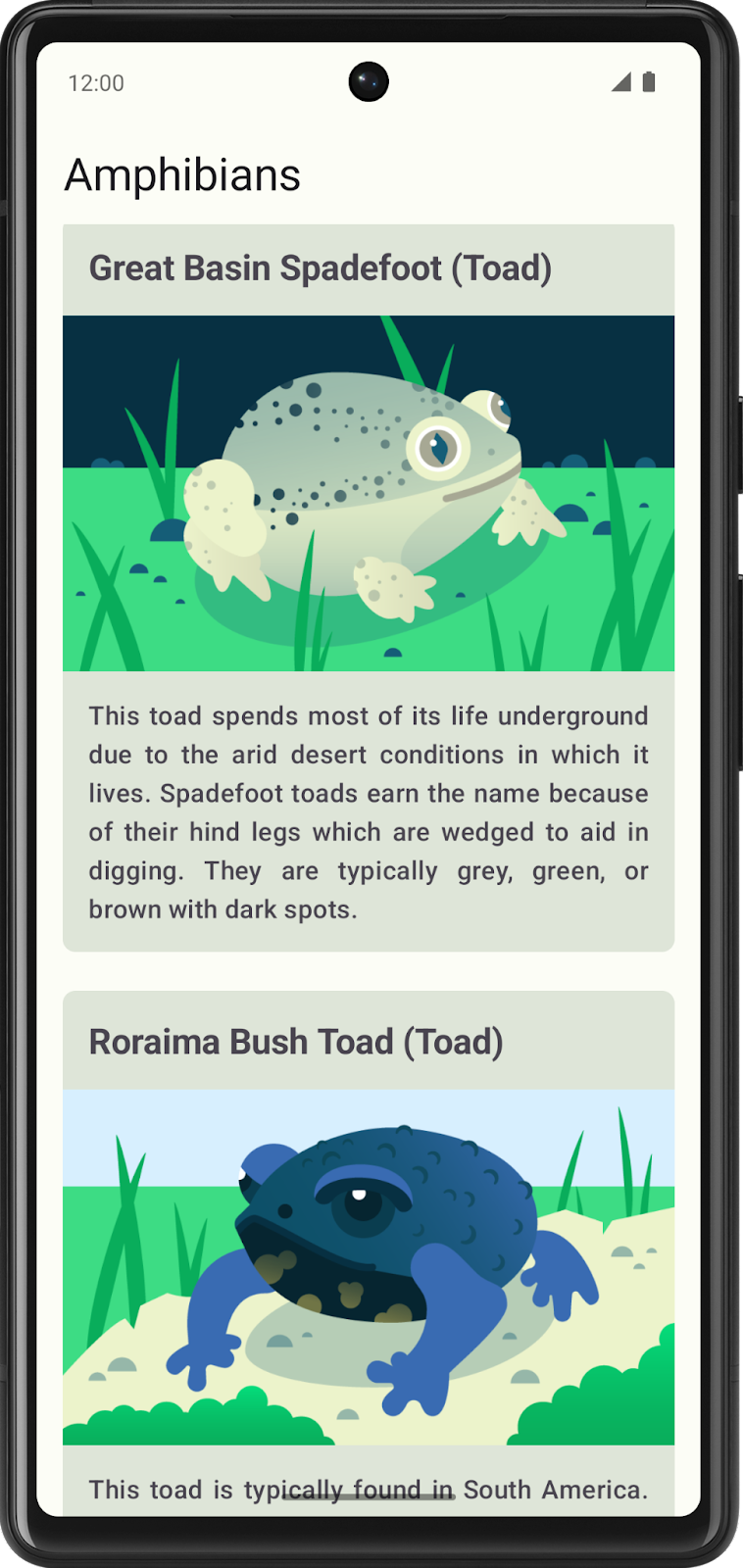
The Amphibians app is developed based on the MarsPhotos app architecture. The code has been copied, pasted and adapted from the MarsPhotos app to the Amphibians app. https://github.com/annedawson/Amphibians This is what the app will look like when it's finished:

Download the latest code from:
https://github.com/annedawson/Amphibians


See:
https://developer.android.com/codelabs/basic-android-kotlin-compose-load-images
https://developer.android.com/codelabs/basic-android-kotlin-compose-practice-amphibians-app

Artificial intelligence research - it's a mess

  Image by DC Studio on Freepik https://www.theguardian.com/technology/2025/dec/06/ai-research-papers The above is an interesting article ab...